Showing posts with label Euwe. Show all posts

Tuesday, October 29, 2024

New ideas in the Euwe

 hello Blackmar Diemer fanatics.

Resuming my posts here after a long pause :-(

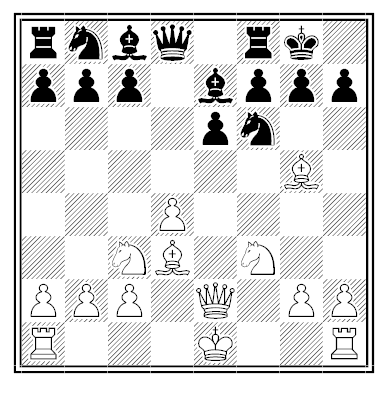
Working now with the latest Stockfish 17 engine which brings clarity in so many old lines. Today I am starting off with a basic position in the Euwe after 6...Be7 7.Bd3 Nbd7 (diagram)
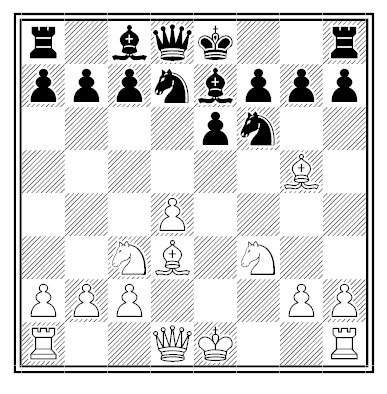

I used to consider the old 8.0-0 as the strongest move ( cfr my earlier post ), but now, Stockfish 17 immediately indicates that 8.Qe2 is much stronger.\, followed by castling queenside.

Likewise, I automatically replied 8.0-0 against the main line 7...0-0, only to learn today that 8.Qe2 ( diagram) is much stronger.
The Zilbermints line after 6.Bg5 Be7 7.Bd3 Nc6 8.0-0 is immediately refuted after 8...Nxd4 9.Kh1 c5 and Stockfish thinks white has less than nothing. Instead, the simple 8.a3 0-0 9.Qd2 is suggested with equal game.

For another annoying line 6.Bg5 Nc6, i suggested 7.Bb5 but the silicon monster clearly prefers 7.Qd2


Seems like we have to review lots of new theory here :-(

Saturday, July 1, 2017

What a great day

hello all, long time no see 😧

I got a new PC which seems to be a bit stronger than my previous - maybe this will help to develop Blackmar Diemer theory further...

In any case, I was looking at a strong black line in the Euwe defense : 1.d4 d5 2.e4 dxe4 3.Nc3 Nf6 4.f3 exf3 5.Nxf3 e6 6.Bg5 Be7 7.Bd3 0-0 8.0-0 c5 (diagram)

I have always struggled with this move, just because it is so simple and thematic in the French defense. And also because I never found a good white continuation. Scheerer suggests 9.dxc5 Bxc5 10.Kh1 which is obvioulsy not bad for white. But I never found a good white continuation after b;lack's most challenging line 9.dxc5 h6 .

So today, with the help of my new silicon assistant, I got to 10.Bxf6 Bxf6 11.Ne4 (diagram)

Black try it safely and play 11...Be7, but gets no advantage after 12.Kh1, removing the white king from any future annoying checks.

Also, 11...Bd4+12.Nxd4 Qxd4+ 13.Kh1 brings nothing aftre 13...f5 14.c3 Qd5 15.Bc4 and white will soon regain the pawn.

Which leaves 11...Bxb2 12.Rb1 (diagram) when black makes an awfull lot of moves with the blackcolored bishop.

a/ 12...Be5 13.Nxe5 Qd4+ 14.Kh1 Qxe5 15.Nd6 =+ ( Black cant capture the c5 pawn as this would result in a forced draw - try it yourself )

b/ 12...Bd4+ 13.Kh1 doesnt bring black anything more than line c

c/  12...Bf6 13.Bb5 =+ and white can damage the black pawn structure if black exchanges queens

d/ 12...Ba3 13.Rb3 += brings the black rook into the action

So, it seems that white has a decent answer to the 8...c5 9.dxc5 h6 line. True, it doesnt bring equality, but it sure is no refutation as I believed before.

Saturday, March 4, 2017

Castling on both sides

hi Blackmar Diemer fans !

Today I'd like to share a game when both players rushed out to attack the enemy kings - bust as usual, the Blackmar Diemer side prevails.

Guido De Bouver - NN

1.d4 Nf6 2.f3 d5 3.e4 dxe4 4.Nc3 exf3 5.Nxf3 e6
The Euwe defense

6.Bg5 Be7 7.Bd3 c5
One of the better defensive moves. I had played many times against this opponent, so I realized he had prepared this line. I needed to get something differently.

8.Qe2
New, but bad :-(

8...0-0 9.0-0-0 Nbd7 (diagram)

10.h4 a6 11.h5 h6 12.Bd2 b5 13.g4 c4 (diagram)
The pawn storm on both side of the board has appeared

14.Be4 Rb8 15.g5 hxg5 16.Rdg1 b4 (diagram)
It seems like black's pawn storm has more stamina ?!
But now comes the killer move ( I thought 1 hr to find and confirm it )

17.Bxg5 !! bxc3 18.Bh6
Here my opponent made a crucial mistake in this complicated position

18...Rxb2
Black thinks to see the victory - the idea of Rb1+ Kxb1 Qb6+ Kc1 Qb2+ Kd1 Qb1 is appealing

19.Qg2 (diagram)
Opening an escape field on d2 aftre black's mate attack
And victory was soon mine !!!


Aftrethoughts,
After 7...c5, white should play the simple 8.dxc5 (diagram) and obtain equality.


Sunday, September 18, 2016

A New Morning

Looking at the date of my latest post - it is really time to post again. So, with the Bob Dylan album "New Morning" from 1970 playing in the background, I choose to write again on a game I played last weekend.

Guido De Bouver - NN
1.d4 d5 2.e4 dxe4 3.Nc3 Nf6 4.f3 exf3 5.Nxf3 c6 6.Bc4 e6
A superdefensive Caro Kan French !

7.Bg5 Be7 8.0-0 0-0 9.Qe1 Nbd7 10.Rd1
I knew this was not the best move, but I realised my opponent ( who choose not to be named ) has prepared against the Blackmar Diemer, so I wanted to deviate from the normal paths.

10....Nb6 11.Bd3 Nbd5 12.Qh4 (diagram)

Let's have a closer look at the position. White has wasted 2 moves to get to the ideal Euwe defense position ( Bc4 and Rd1 ), whilst black has played the suboptimal c6. Is this still playable for white ?

12...g6
The only move for black

13.Ne5
Seems like a natural move, but 13.Nxd5 Nxd5 14.c4 is much stronger

13...Nh5
Again the only move (diagram)

14.Ne4
Probably not the bets move, but both Bxe7 and Bxg6 lead to a difficult endgame ahead for white

14...f6 15.Nxf6 (diagram)

Here black played 15...Ndxf6, which was punished by the unexpected 16.Nxg6 and I won quickly.

Seems like black's only move an advantage is 15...Rxf6 16.Bxf6 Bxf6 17.Qe4 with black having two white pieces for the rook.

Bottomline : dont deviate from the established path by wasting time with silly moves like 10.Rd1. But even then, black's path to success is far from easy.

Doesn't that sound like a new morning ?

Friday, September 11, 2015

Annoying defenses should be forbidden.

Yesterday evening, I was confronted with an annoying defense, I was confident I got it right, but found myself without any advantage.

1.d4 d5 2.e4 dxe4 3.Nc3 Nf6 4.f3 exf3 5.Nxf3 e6 6.Bg5 Bb4
Not the strongest black continuation in the Euwe

7.Bd3 h6 (diagram)


The analogy with the lines after 6...h6 forced me to exchange on f6 without any thought, as white gets a great attack on the f column.

8.Bdf6 Qxf6 9.0-0 Bxc3 10.bxc3
With a pawn ahead, black decides to exchange another piece.

10...0-0 (diagram)
"Life can be simple, even when faced with the complicated Blackmar Diemer gambit"... That's sort of blakc's thinking here. Another one could be "Show me what you have for the pawn".

11.Ne5 Qe7 (diagram)

 I had been playing on automatic up till this point, under the impression that I would have a simple game. However, now I realised that things aren't that simple as I believed... I played 12.Qg4 in the above position and lost in the resulting endgame.

With silicon assistance, it seems 12.Qe2 is best here.

a/ 12...Nd7 13.Rf3 Nxe5 14.dxe5 (+=)

b/ 12...Nc6 13.Nxc6 bxc6 14.Rf5!!! (+=)

c/ 12...Bd7 13.Qg4!!!! (++)

So it seems that every annoying defense has some great refutation - but you have to find it !!

Tuesday, August 11, 2015

Mea Culpa

It seems my last post on the Queen's Indian Euwe contained a mistake as pointed out by Maximilien from France.

I indicated that white gets a confortable play after 1.d4 d5 2.e4 dxe4 3.Nc3 Nf6 4.f3 exf3 5.Nxf3 e6 6.Bg5 Be7 7.Bd3 0-0 8.0-0 b6 9.Qe1 Bb7 10.Qh4 h5 (diagram) 11.Bxf6


White is indeed better after 11...Bxf6 12.Qxh5 g6 13.Bxg6 fxg6 14.Qxg6+ Kh8 15.d5 (diagram)

a/ 15...exd5 16.Qh5+ Kg8 17.Qg4+ Kh8 18.Nh4 (++)

b/ 15...Bxd5 16.Qh5+ Kg8 17.Qg4+ Bg7 18.Ng5 (++)

c/ 15...Qe8 16.Qh6+ Kg8 17.Ng5 (++)

d/ 15...Qe7 16.Ng5 (=)

So is seems i missed black's best continuation 15..Qe7 and 11.Rad1 is the only move that gives white an advantage.

Thursday, July 30, 2015

Queen's Indian Euwe

when playing blitz games, I get lately a lot of Euwe defenses where black fianchettos his queens bishop - a horrible strategy.

1.d4 d5 2.e4 dxe4 3.Nc3 Nf6 4.f3 exf3 5.Nxf3 e6 6.Bg5 Be7 7.Bd3 0-0 8.0-0 b6 9.Qe1 Bb7 10.Qh4 (diagram)


Many of my blitz opponents play these moves rather quickly, as if the Blackmar Diemer behaves like a normal opening...

In the above postion, black is hopelessly lost, eg 10...Nbd7 11.Bxh7+ (++) or 10...h6 11.Bxh6 (++)

Black's best ( if this word can still be used in this position ) might be to remove the target on h7 :

10...h5 ( diagram)

White's best reply here is 11.Rad1, but also an inferior move can bring white victory :

11.Bxf6 Bxf6 12.Qxh5 g6 13.Bxg6 fxg6 14.Qxg6+ Kh8 15.d5 (diagram)

White opens up many lines and has by far the most promising game.

Friday, June 12, 2015

An interesting novelty

Today I faced an interesting novelty, something I never encountered before in my 15-year Blackmar_Diemer experience ( ok, maybe I forgot a few less memorable games, but it wont be a many ). In any case, black tried to exchange a few pieces but quickly lost the way in the labyrith of moves.

1.d4 d5 2.e4 dxe4 3.Nc3 Nf6 4.f3 exf3 5.Nxf3 e6 6.Bg5 Be7 7.Bd3 0-0 8.0-0 Ng4 (diagram)

This is the novelty, black tries to exchange a few pieces as to use his pawn majority in the endgame.

9.Ne4
My silicon assistant indicate sthat both 9.Bxe7 and 9.Qd2 might be slightly better, but 9Ne4 is good enough.

9...Bxg5 10.Nfxg5
I gave this a 30 minutes thought, but I could not find a good move after 10.Nexg5 h6. I was hoping somehow that black would try 10...Ne3 ??, but I guess the white refutation 11.Qh5 was too obvious.

10...Qxd4+ (diagram)
And now I played a great move... can you find it ?

11.Nf2
Creating three different threats :
> the attack of h7
> the knight on g4
> the queen is undefended after Bxh7+
My opponent noticed the chances were turning and hoose the only reasonable defense

11...f5 12.Bxf5 Qxd1 13.Bxh7+ Kh8 (diagram)

Here I choose 14.Raxd1, resulting in an equal game, but 14.Nxd1 would have been better after 14...Rxf1 15.Kxf1 Nxh2+ 16.Ke2 Ng4 17.Ne3 (diagram) with nasty threats along the h file.

Black has no other option than 17...Nf6 18.Bg6 and white is leading the dance, despite being a pawn down.

Friday, February 28, 2014

Learning slowly

I was faced this weekend with one of black's best defenses in the Euwe.

1.d4 d5 2.e4 dxe4 3.Nc3 Nf6 4.f3 exf3 5.Nxf3 e6 6.Bg5 Be7 7.Bd3 h6 8.Be3 Nc6 9.a3 Nd5 (diagram)


I played 10.Qd2 after which black was able to remove the pressure with 10.Qd2 Nxe3 11.Qe3 Bf6 12.Ne2 Qe7 and black was better.

After some thought, it is obvious that 10.Nxd5 is better than 10.Qd2 with following lines :

a/ 10...Qxd5 11.0-0 (diagram)

...a1/ 11...0-0 12.c4 (=)
...a2/ 11...b6 12.c4 (+=)
...a3/ 11...Bf6 12.c4 (=)
...a4/ 11...Bd7 12.c4 (+=)
...a5/ 11...f5 12.Qe2 (=)

b/ 10...exd5 11.0-0 (diagram)

...b1/ 11...0-0 12.Qd2 (=)
...b2/ 11...Bg4 12.Qd2 (=)
...b3/ 11...b6 12.Bb5 (++)
...b4/ 11...a6 12.Qd2 (=)
...b5/ 11...Be6 12.b4 (=)

So we see that black has nothing to fear in this line after 10.Nxd5.

Wednesday, November 13, 2013

The Euwe - O'Kelly : One move less also wins

My previous post on the "Euwe - O'Kelly defense" raised some comments. User "Anonymous" suggested 11.Bd3 (diagram) in the position after 1.d4 d5 2.e4 dxe4 3.Nc3 Nf6 4.f3 exf3 5.Nxf3 c6 6.Bc4 e6 7.0-0 Be7 8.Qe1 Nbd7 9.Bg5 0-0 10.Qh4 h6. In my post, I only considered 11.Bxh6 with equal play ( provided black find sthe right moves !! )


This position might seem familiar to the attentive reader as this position can be reached in the EUwe defense after 1.d4 d5 2.e4 dxe4 3.Nc3 Nf6 4.f3 exf3 5.Nxf3 e6 6.Bg5 Be7 7.Bd3 Nbd7 8.0-0 0-0 9.Qe1 c6 10.Qh4 h6. The only difference is that it is white to move in the Euwe, whilst it is black's turn in the Euwe-O'Kelly. Talking about a small difference.

But even with white one move down, it seems that 11.Bd3 is winning !!

a/ 11...hxg5 12.Nxg5 (++)

b/ 11...Nb6 12.Bxh6 (++)

c/ 11...Nd5  12.Nxd5 Bxg5 13.Nxg5 Qxg5 14.Qxg5 hxg5 15.Ne7+ Kh8 16.Rae1 (+=)

d/ 11...Qa5 12.Ne4
...d1/ 12...Re8 13.Rae1 (+)
...d2/ 12...Rd8 13.c3 (+)
...d3/ 12...Bd8 13.b4 (+)
...d4/ 12...hxg6 13.Nexg5 (++)

e/ 11...Qb6 12.Bxh6 (++)

f/ 11...Qc7 12.Bxh6 (++)

g/ 11...c5 12.Bxh6 (++)

Let's consider balck's best reply in more detail : 11...Re8 12.Bxh6 (diagram)

Declining the piece is no option for black :

...h1/ 12...Nf8 13.Ne5 (++)
...h2/ 12...Nd5 13.Nh7+ (++)
...h3/ 12...Qa5 13.Bg5 (++)

And now the killer move 12...gxh6 13.Ne5 !! Analysis shows only 13...Bf8 offers some chances. But now white brings in an extra piece with 14.Rf3 (diagram)

Again, black has only one move 14...Bg7, followed by the logical 15.Rg3 (diagram)

As "Anonymous" pointed out, black has to give back the piece with 15...Ne4, but white stays on top after 16.Qxe4 f5 17.Qe3 Nxe5 18.Qxe5 (+=)

Apparently, the Euwe defense is so strong that it evens wins with the move down !

Thank you "Anonymous" for this great line !

Wednesday, June 5, 2013

Zilbermints gambit in the Euwe defense

I admit - I am touching a very delicate item right now. Something that will certainly stir angry reactions. But nonetheless, I am covering it - the Zilbermints gambit in the Euwe defense occuring aftrer 1.d4 d5 2.e4 dxe4 3.Nc3 Nf6 4.f3 exf3 5.Nxf3 e6 6.Bg5 Be7 7.Bd3 Nc6 8.00 Nxd4 and now  9.Kh1 (diagram).

I once showed this gambit-in-a-gambit to an IM friend of mine, and he felt really annoyed. "Why do you show this to me ?", he asked. "Do you want to test me on my defensive skills ?". Me, a mere mortal, I did not dare to answer this obvious question with a honest answer, so I just repsonded with a simple "I just wanted to know what you would play against this aggresive move." So he looked at the board for a few minutes and played 9...c5.

Okay, I expected that one. "Can't be bad - I protect my outpost and make some space for the queen", he added.

Since then, I have always distrusted the Zilbermints gambit. Maybe it is me being an engineer, wanting a clear path ahead for every move, that narrows my eyesight, but I cant see any white plan here.

Let's consider 10.Qe1 (what else) followed by the simple exchnage 10...Nxf3 11.Rxf3 (diagram). Note that black has stronger 10th moves and that taking the knight is rather silly now, aftre having defended it first with c5, but anyway.

My silicon assistant now gives 3 moves that give the defender the advantage : 11...Bd7, 11...a6 and 11...h6. Of course, white can only dream of black castling now into it, but that is not real chess, but  wishfullthinking chess.

Let's consider 11...Bd7. Houdini suggests 12.Rad1 (diagram) - who am I to doubt that ?

Houdini now suggests 5 black moves with a black advantage - surely there will be one that allows black to exchange some pieces ? 12...a6 is recommended, but let's look at 12...Bc6 (diagram)

To me, it seems the attacker has less than anything here. Sure, black has not yet castled and his queen is about to be x-rayed, but all of white's threats can be answered.

Summary, the Zilbermints gambit in the Euwe defense is to be respected, but not to be feared and there are many black lines leading to a black advantage.

Friday, April 19, 2013

Minor line in the Euwe

Sometimes people hate it when their opponent doesn't play the recommended book moves. So do I. It is so frustrating to see your opponent deviate from the main line - you know the line he plays is not the best, but how to refute it ? That sometimes gets to you, and you fail to play good moves.

So a good preparation is crucial, especially when playing sharp opening.

That's why I consider today one of these inferior, but very hard to beat sidelines in the Euwe defense.

1.d4 d5 2.e4 dxe4 3.Nc3 Nf6 4.f3 exf3 5.Nxf3 e6 6.Bg5 Nc6 (diagram)

My silicon assistant kindly suggests 4 options :

a/ 7.Bb5 (diagram)
...a1/ 7...Be7 8.00 (=)
...a2/ 7...Bd7 8.d5 exd5 9.Nxd5 (=)
...a3/ 7...a6 8.Bxc6+ bxc6 9.Ne5 (=)
...a4/ 7...Bd6 8.00 (=)

b/ 7.Ne4 (diagram)
After 7...Be7, white has nothing else than 8.Nxf6+ (=)

c/ 7.Bd3 (diagram)
After 7...Be7 we reach a well known position which is hard to play for many gambiteers.

d/ 7.Qd2 (diagram)
7...h6 urges white to exchange or retreat, but weakens his kingside. This might not be bad, since black can force the exchange, eg 7...h6 8.Bf4 Bd6 (=+)

So I believe the simple 8.Bb5 is strongest. Black can force a small advantage after 7...Be7. But I will cover that in a later blog.

So we see these so called bad moves are not that bad at all !

Friday, November 2, 2012

Enough proof ?

After some stupid article on chess.com on the correctness of the Blackmar Diemer gambit ( cfr to my earlier blog "Another nonbeliever" ), I looked up the position that the author referred to. I was surprised that I already covered that one in May 2011. Here's the article : "Really that bad".

Today I will be going in detail in one of the resulting positions : 1.d4 d5 2.e4 dxe4 3.Nc3 Nf6 4.f3 exf3 5.Nxf3 e6 6-Bg5 Be7 7.Bd3 Nbd7 8.00 c5 ( the so-called refutation ) 9.Kh1 ( the refutation of the refutation ! ) cxd4 10.Nxd4 00 11.Qe1 (diagram).

a/ 11...Nd5 A simple way to exchange pieces, no ? 12.Nxe6!! fxe6 13.Qxe6+ Kh8 14.Qe4 (+)

b/ 11...Nc5 12.Rd1 (diagram)

...b1/ 12...Nxd3 13.Rxd3 Bd7 14.Nf3 Qe8 15.Ne5 (+=)
...b2/ 12...h6 13.Bh4 (=)
...b3/ 12...a6 13.Nf3 (=)
...b4/ 12...Bd7 13.Nb3 (=)
...b5/ 12...Kh8 13.Nb5 (+=)
...b6/ 12...Qc7 13.Qh4 (+)
...b7/ 12...Qb6 13.Bxf6 Bxf6 14.Rxf6 gxf6 15.Qh4 (+)
...b7/ 12...Qa5 13.Nd5 (++)

c/ 11...Qc7 12.Qh4 (+=)

d/ 11...Qb6 12.Qh4 (diagram
...d1/ 12...h5 13.Nb3 (=)
...d2/ 12...Re8 13.Bxf6 Nxf6 14.Rxf6 (=)
...d3/ 12...h6 13.Bxh6 gxh6 14.Qxh6 Qxd4 15.Rd4 (++)
...d4/ 12...g6 13.Rad1 (+)

e/ 11...Qa5 12.Ndb5 (diagram)


...e1/ 12...Qb4 13.a3 (=)
...e2/ 12...h6 13.Nd5 (+=)
...e3/ 12...Re8 13.Qg3 (+=)
...e4/ 12...a6 13.Nd5 (+=)

f/ 11...h6 12.Bh4 
Will be covered in a later blog.

g/ 11...b6 12.Nc6 Qe8 13.Nxe7 Qxe7 14.Ne4 (++)

h/ 11...a6 12.Qh4
...h1/ 12...h6 13.Bxh6 Ne5 14.Bxg7 Kxg7 15.Rxf6 (+=)
...h2/ 12...Re8 13.Nxe6 fxe6 14.Ne4 (+=)

Doesn't look too bad, no ?


Monday, September 17, 2012

Ah, the joy of gambit play.

I won a nice game in our clubmatch last friday, but the result could have been quite differently. I got into a comfortable Euwe, but then things started to get difficult.

Guido De Bouver - Patrick Morote
1.d4 Nf6 2.f3 d5 3.e4 dxe4 4.Nc3 exf3 5.Nxf3 e6 6.Bg5 Be7 7.Bd3 Nbd7 8.00 00 9.Qe1 c6 10.Qh4 Qa5 (diagram)

This cant be right I said to myself - I knew that c6 was too slow and that white was simply winning here.

11.Ne5
By far the strongest move - there is steam coming out if my analysis engine ! ( for the fainthearted under us, 11.Bxh7+ Nxh7 12.Bxe7 Re8 13.Rae1 is far simpler but less joy... )

11...h6 what else ?

12.Bxh6 Nxe5 13.Bxg7?? (diagram) completely missing the refutation 13...Ng6!

13...Kxg7 Luckily my opponent also missed it !

14.Qg5+ and I quickly won in 17 moves.

In the analysis, it is obvious that 12.Bxh6 was not optimal. I should have played 12.Ne4 (diagram), adding yet another piece into the attack, but that is not so easy to see over the board, with the clock ticking away.

a/ 12...Nxe4 13.Bxe7 (++)

b/ 12...Nxe5 13.dxe5
...b1/ 13...Qxe5 14.Nxf6+ Bxf6 15.Bxf6 (++)
...b2/ 13...Nd5 14.Bxe7 Nxe7 15.Qxe7 (++)

c/ 12...Qd5 14.Nxd7 (++)

d/ 12...hxg5 14.Nxg5 (++)

e/ 12...Qd8 14.Nxd7 (++)

So I missed a fantastic combination and was happy to win the point as I missed black's refutation 13...Ng6. But the lines after 11.Ne5 h6 12.Ne4 are so great. Black is overwhelmed with white's pieces - but the combination sure is not that easy to see over the board. Guess that does not happen in the dull Queen's gambit lines ?

Sunday, September 2, 2012

The last straw

In our never ending story on Euwe's refutation of our beloved gambit occuring after 1.d4 d5 2.e4 dxe4 3.Nc3 Nf6 4.f3 exf3 5.Nxf3 e6 6.Bg5 c5!, I am presenting today white's last option.

I already discussed 7.Bxf6 Qxf6 8.Bb5+ and 7.Bxf6 Qxf6 8.d5. Today, I will be covering the simple 7.d5 (diagram).


a/ 7...Be7 8.Bb5+
...a1/ 8...Bd7 9.dxe6 (+=)
...a2/ 8...Nbd7 9.d6 Bf8 10.00 (+=)
...a3/ 8...Nfd7 9.dxe6 fxe6 10.Qe2 (+)
...a4/ 8...Kf7 9.00 (=)

b/ 7...Bd6 8.Bb5+ (+=)

c/ 7...exd5 8.Bb5+
...c1/ 8...Nc6 9.Bxf6 (+=)
...c2/ 8...Nbd7 9.Nxd5 (+)
...c3/ 8...Bd7 9.Nxd5 (+=)

d/ 7...h6 8.Bxf6 (+=)

e/ 7...a6 8.dxe6 (diagram)
...e1/ 8...Qxd1+ 9.Rxd1
......e1a/ 9...Bxe6 10.Bxf6 gxf6 11.Nd5 Bxd5 12.Rxd5 (=)

......e1b/ 9...fxe6 10.Bd3 (=)
...e2/ 8...Bxe6 9.Qxd8+ Kxd8 10.000 (=)

...e2/ 8...fxe6 9.Qxd8+ Kxd8 10.000 (+=)


So it seems white enjoys a small advantage in the majority of lines, except when black chooses the single right answer, the surprising 7...a6.

We have now come to the end of our journey in Euwe's refutation of the Blackmar Diemer. In "A bit of a setback", I discovered the problem.

Blogs "An update of the refutation of the refutation !?" and "An update on the refutation of the refutation (part 2)" discussed 6...c5 7.Bxf6 Qxf6 8.Bb5+ Bd7.

"More complicated Euwe defenses" analysed 6...c5 7.Bxf6 Qxf6 8.Bb5+ Nd7.

6...c5 7.Bxf6 Qxf6 8.d5 was covered in "An alternative line" whilst 6...c5 7.d5 is looked on this page.

What line is best for white ? I guess it depends on your personal skills. If you have great positional drawing skills, then the queenless endgame after 6...c5 7.d5 will suit you best. If you like to attack like a madman, then 6...c5 7.Bxf6 Qxf6 8.Bb5+ will be your normal choice.  But whatever your preference, the Blackmar Diemer gambit offers great lines for the whote player. But I guess we already new that.

Monday, August 20, 2012

An alternative line

Last week, I showed that the line 1.d4 d5 2.e4 dxe4 3.Nc3 Nf6 4.f3 exf3 5.Nxf3 e6 6.Bg5 c5 7.Bxf6 Qxf6 8.Bb5+ offers no advantage to white as black can get an equal game after both 8...Bd7 and 8...Nd7.

So let's look for some alternatives. 8.d5 shows up immediately (diagram). Possible black moves include : 8...a6, 8...exd6, 8...Nd7, 8...Be7, 8...Bd6 and 8...Bd7

a/ 8...Bd7 9.Bc4 (+=)

b/ 8...Be7 9.Bb5+ (diagram)
...b1/ 9...Bd7 10.00
......b1a/ 10...a6 11.dxe6 fxe6 12.Ne4 Qh6 13.Bxd7+ Nxd7 14.Nfg5 (=)
......b1b/ 10...00 11.Qe2 (+=)
......b1c/ 10...Bxb5 11.Nxb5 (+)
......b1d/ 10...e5 11.Qe1 (+)
......b1d/ 10...Qh6 11.Qd3 (+=)
...b2/ 9...Nd7 10.d6 Bd8 11.00 (=)

c/ 8...Bd6 9.Bb5+ (+)

d/ 8...Nd7 9.Bc4 (=)

e/ 8...exd6 9.Bb5+ (+=)

f/ 8...a6 9.Qd2 (diagram)
...f1/ 9...Nd7 10.dxe6
......f1a/ 10...fxe6 11.000 (=)
......f1b/ 10...Qxe6+ 11.Kf2 (+=)
...f2/ 9...Bd7 10.000 (+=)
...f3/ 9...exd5 10.Nxd5 (+=)
...f4/ 9...e5 10.Bd3 (=)
...f5/ 9...Be7 10.Bd3 (=)
...f6/ 9...Bd6 10.dxe6 (=)


So we see that white doesn't have any improvement in 7.Bxf6 Qxf6 8.d5 compared to 8.Bb5+. What now ? Accept that the Blackmar Diemer does not win by force ? But then again, it took a worldchampion to figure out the great countermove 6...c5.